Showing posts with label SLR Camera. Show all posts

Thursday, October 18, 2012

Nikon D600 Review – More Than Just an Entry Level DSLR

The Nikon D600 digital SLR camera offers 24-megapixel full-frame sensor, the SLR digital camera costs about $2,100 on the market (body only). Although the D600 is classified as an entry level DSLR but at the first glance it looks more professional than any other digital cameras at its category.

The Body of Nikon D600 Digital SLR Camera

The dimension looks smaller than the D800; however it is a little bit bigger than the D7000. Overall, the digital camera weighs about 2 pounds which is still fairly handy. The lightweight magnesium-aluminum alloy for the casing, only applies on the front of the camera, it reduces the cost but still offering a high quality. Nikon has put together this excellent mix of materials. The controls on the back are arranged so that the Nikon D600 can operate very quickly with the thumbs of both hands. For example, the requirements for the ISO sensitivity and white balance are changed instantly. Top left of the top plate sits a handy mode dial that is secured with a lock to prevent accidental adjustment. The right half of the upper side is dominated by a large-area status display, which can be illuminated with a light turning on the main switch. In use, the Nikon D600 is very handy despite its size. The viewfinder shows a great and pleasant bright picture. Even an electronic level can show itself, then the exposure scale displays at the bottom of the viewfinder if the camera is tilted to the right or left.
Nikon D600 ReviewBuy Nikon D600

Could not find what you were looking for?

Thursday, March 8, 2012

Please Welcome the Canon EOS 5D Mark III

About three years after the phenomenal Canon EOS 5D Mark III was released, the manufacturer brings its successor; Canon EOS 5D Mark III. The 5D Mk III is one of the most anticipated digital SLR cameras. Shipping on April 2012, the Mk III listed for $3.499 (without lens).

Canon EOS 5D Mark III

The Canon EOS 5D Mark III comes with premium 3.2 inch display with 1.04 million pixels resolution. The housing is weather-resistant sealed so that you don’t need to worry about water splash on its screen.

Canon EOS 5D Mark III First Preview

The Canon 5D Mk III delivers lots of shortcuts and dials, promise a professional workflow. Do not forget that the predecessor won over 40 awards various tests. The full frame sensor has a 22.3 megapixels, which is little higher than the Mark II. The ISO range is 100-25600 and is expandable up to the range of 50 - 102400. The image data is processed by a DIGIC 5 + sensor.


Progress can be expected especially in the video mode, for here was three years Canon have new experiences. Again, the Canon EOS 5D Mark III takes on with full HD quality. Also present: a silent mode, e.g. at weddings or in animal photography can be useful. Even for a game like an HDR mode, the camera is satisfying.

While waiting for the first tests of Canon Mark III, the Canon EOS 5D Mark III’s specs reveal a lot about the standard qualities. The EOS 5D Mk III provides up to 6 frames / second, including 18 RAW images at a time and an infinite number of JPEGs (or filled up the memory card).


But in terms of deployment speed, we expect good results. The digital SLR camera has an autofocus with 61 measuring points, of which 41 cross-type sensors and 5 twin cross-type sensors.

Canon EOS 5D Mark III Preview: Conclusion

The Canon EOS 5D Mark III promises to be an excellent professional tool. As the alternatives, there are Canon D800 and Canon EOS-1D X that have almost similar features and specs as the Mk III.

Could not find what you were looking for?

Thursday, February 16, 2012

Nikon D4 Digital SLR Camera with Full 1080p HD Video

Nikon D4 Digital SLR Camera is new flagship D-SLR from Nikon. The Digital SLR camera offers speed and accuracy with a 16.2 MP FX-format CMOS sensor, 10/11 fps continuous shooting, a 91,000-Pixel RGB sensor and Advanced SRS, improved 51 point AF System, ISO expanded to 204,800 and 1080p video at 30p with stereo sound.

Nikon D4 Digital SLR Camera

Nikon D4 Digital SLR Camera offers a level of speed and accuracy that will redefine your notion of the fleeting moment. A carefully selected FX-format 16.2 Megapixel CMOS sensor is paired with Nikon’s powerful EXPEED3 image processor for stunning stills up to 11 fps. A 91,000-Pixel RGB 3D Color Matrix Metering III sensor partners with Nikon’s Advanced SRS to deliver unmatched accuracy in every frame. Add a faster, more responsive 51-point AF system for a camera that can keep pace with you.

Enhance stories with Nikon D4 Digital SLR Camera HD video

When an assignment calls for broadcast-quality video and audio, Nikon D4 Digital SLR Camera is ready. Choose from three Multi-area mode Full HD D-Movie (1080p) video formats: FX, DX or the new 2.7x Crop mode—all at 16:9 aspect ratio. Manual exposure control helps keep the same look from start to finish. Built-in HDMI lets you view footage on an external monitor or record uncompressed 8-bit 4.2.2 footage directly to an external recording device. Even take 2MP stills simultaneously while filming. Attach the ME-1 Stereo Microphone and record high fidelity audio with minimal camera noise. On-screen audio level indicators and a headphone jack help you monitor and adjust audio in 20 incremental steps. D4 takes you from inspiring still to amazing videos with ease.


Nikon D4 Digital SLR Camera is designed for an efficient workflow

Nikon D4’s remarkable design is the culmination of photographer feedback and Nikon innovation. Adjust AF and AF Area modes without moving your eye from the viewfinder. Quickly select AF points with a new joystick style sub-selector—positioned for both horizontal and vertical shooting. In low-light, all operation buttons and dials are beautifully backlit. Two media card slots offer flexibility and control. Built-in wired LAN and the optional WT-5A Wireless Transmitter enable secure, high-speed file transmission as well as remote camera functionality. Simply put, D4 was built to meet professional demands.

In sum, The Nikon D4 Digital SLR Camera offers a powerful combination of up to 11 fps, a 16.2 megapixel FX-format sensor and phenomenally high ISO (extendable up to 204,800, equivalent). D-movie delivers all the flexibility you need for broadcast quality video. The Kevlar/carbon fiber-composite shutter unit boasts a standard life cycle rating of 400,000 releases, thirty percent more than its predecessor.

Could not find what you were looking for?

Wednesday, February 15, 2012

Nikon D800 Digital SLR Camera Review

Meet the Nikon D800 Digital SLR Camera, a 36.3 megapixel FX-format HD-SLR for professional photographers who require end results of the highest quality, who demand superior performance, speed, handling and a fully integrated imaging system. For cinematographers and multimedia professionals, 36.3 MP means true 1080p HD cinematic quality video. Inputs for stereo microphones and headphones, a peak audio meter display, DX crop mode to maximize NIKKOR lens selection and increase angle of view plus much more—the D800 is the essential tool for today's still and video professional.

Nikon D800 Digital SLR

The Nikon D800 36.3 megapixel FX-format advantage

Wedding, commercial or landscape, the Nikon D800 Digital SLR Camera is the ultimate 36.3 MP FX-format camera for creative genius. Witness tonal range and precision rendered to supreme clarity, depth and texture. Make poster sized prints without sacrificing detail. Explore creative opportunities with ISO 100 to 6,400 (expanded up to 25,600)—shoot from dawn to dusk. Experience Nikon's new Advanced Scene Recognition System featuring a 91,000-pixel RGB light meter capable of rendering unprecedented levels of accuracy to AF, AE, i-TTL flash control, face recognition and auto white balance. Nikon's new EXPEED 3 image processing reduces color phase shifts seen with lesser systems, producing more faithful colors and tones while managing massive amounts of data at breakthrough speed. With the D800 in your hands, achieve what was once unreachable.

A full cinematic experience with Nikon D800 Digital SLR Camera

Filmmakers, multimedia professionals and event photographers—record Full HD 1080p at 30/25/24p or 720p at 60/50p in AVC format. Produce to your exacting vision when working in manual mode, controlling aperture, ISO, AF and shutter speed with Nikon D800 Digital SLR. Record uncompressed files via HDMI to an external recording device via HDMI. Widen production perspective using either Nikon FX or DX lens formats at Full HD 1080p and 16:9 aspect ratio. Attach headphones and check audio levels or monitor input via peak audio meters as displayed on the camera's LCD monitor. Microphone sensitivity can be adjusted in up to 20 steps. Remotely start and stop video. Simultaneously Live View footage on the camera's LCD monitor and external monitor during recording are possible.

Could not find what you were looking for?

Thursday, January 5, 2012

Review for Canon EOS Rebel T3i 18 MP CMOS Digital SLR Camera with EF-S 18-55mm f/3.5-5.6 IS Lens

Canon EOS Rebel T3i continues to use the 18MP CMOS sensor seen in the Rebel T2i (550D) but gains a tilt and swivel 1,040k dot LCD monitor like the one offered on the more expensive 60D. It also gains the ability to remotely control flashguns using its internal flash, a feature previously only featured on higher-end models. Alongside the camera, Canon is also launching the 18-55mm F3.5-5.6 IS II, a cosmetically revised version of its optically stabilized kit lens.


Canon EOS Rebel T3i with DIGIC 4 Image Processor

The Canon DIGIC 4 Image Processor dramatically speeds up the entire Canon EOS Rebel T3i DSLR’s camera operations for intuitive operation and offers improvements in both fine detail and natural color reproduction. It works in concert with the EOS Rebel T3i DSLR’s CMOS Image Sensor to achieve phenomenal levels of performance in nearly any situation.

Full HD Movie with Canon EOS Rebel T3i

The EOS Rebel T3i does not just shoot video clips, it offers the enhanced ease-of-use, image quality, smooth frame rates and adaptive exposure compensation necessary in a professional video-making tool by boasting the most advanced EOS video capturing features to date: When Full HD (1920 x 1080) is set, you can use Movie Digital Zoom to magnify the center of the image by 3–10x while at the same time maintaining gorgeous Canon Full HD image quality. With the Video Snapshot feature, the EOS Rebel T3i DSLR will capture short video clips (of 2, 4 or 8 seconds) then combine them automatically into one video file as a snapshot or highlights “album.” With no editing needed after shooting, the compiled video is perfect for sharing online or displaying directly on an HDTV via the camera’s HDMI port.

In addition to a number of different recording size and frame rate modes, the Canon EOS Rebel T3i enables easy manual control of exposure, focus and Live View features and even allows for in-camera editing. The large CMOS sensor and compatibility with over 60 lenses provide a wealth of depth-of-field options. And it’s all as easy as the press of a button — the EOS Rebel T3i has a dedicated Live View/Movie Recording start/stop button that gets the shooting started fast.


Let me show you what current owners have to say about Canon EOS Rebel T3i:

Canon does it again.
I owned the T2i for about a year and used it to take pictures at concerts. It was a great camera. When I saw this camera, I got it thinking that it would be better. This camera exceeded my expectations. I have used both cameras at the same time to see the difference. This camera is SO MUCH BETTER. It adjusts to the lighting around me so much better than the t2i and the moving screen is perfect for taking video, since sometimes to get a great shot you need to put the camera in different positions. The microphone is amazing and HD video is spectacular.

It is a great camera for beginners since this camera explains what each mode setting does. This camera was worth every cent and more.
_____________________________________________________________________________
I was nervous that this camera wouldn't be worth the price. Photography is just a hobby of mine. I love taking pictures, but I don't do it for money so I thought this camera would be perfect for me. My pictures are amazing. They're all in focus. I did notice that if you use the AF at all, it's best to use the viewfinder instead of the screen. For some reason, the camera doesn't seem to focus as well when you use the screen. I don't mind that. I always use the viewfinder anyway. In short, I LOVE THIS CAMERA!!!

› See all 243 customer reviews...

Let's take a look at all of the Canon EOS Rebel T3i features.

  • 18.0 MP CMOS sensor and DIGIC 4 Image Processor for high image quality and speed.
  • ISO 100 - 6400 for shooting from bright to dim light.
  • Improved EOS Full HD Movie mode with manual exposure control, expanded recording with new Movie Digital zoom
  • Vari-angle 3.0-inch Clear View LCD monitor (3:2) for shooting at high or low angles and 1,040,000-dot VGA with reflection reduction
  • New Scene Intelligent Auto mode and Picture Style Auto incorporating the new EOS Scene Detection System
  • Video Snapshot features for enhanced video shooting options.

Could not find what you were looking for?

Saturday, November 19, 2011

Canon D60 6.3mp Digital SLR Camera Body Only


Price:
amazon button

Product Description

An evolution in design, a revolution in performance. The Canon EOS D60 takes the highest standards of the photographic world and brings them into the digital one. Combine an innovative 6.3 megapixel CMOS image sensor with the superior optics of Canon's EF lenses, and you have the power to capture the finest details with brilliant color fidelity, wider tonal range, and smoother gradations. You'll do it fast, too: three frames per second in eight-shot bursts at the highest resolution. The EOS D60 is highly advanced, yet features like autofocus, auto exposure, and a built-in flash make it remarkably simple to use. And since it integrates seamlessly into the EOS system, you can pursue your most creative ideas without limitations. The new Canon EOS D60. Digital photography is finally worthy of its name.


Product Details

  • Amazon Sales Rank: #30723 in Camera & Photo
  • Brand: Canon
  • Model: D60
  • Dimensions: 1.76 pounds

Features

  • Digital SLR
  • 6.3 Mega pixel
  • 1.8" Display
Auto Post

Could not find what you were looking for?

Thursday, September 29, 2011

JVC GC-PX10 Digital Camera Preview

JVC GC-PX10 is a completely new way: The device is positioned as a combination of digital camera and HD camcorder. At first glance, the term "hybrid camera" is excessive, but now dominates the majority of digital cameras in the upper price range full HD video recording.

The GC-PX10 rise to the entitlement but with a much higher recording quality: So the digital camera records video clips at 50 frames / second at a data rate of 36 megabits / second. For comparison: Classic Ultra compact cameras usually work with 30 frames / second and a lower data throughput. In Super-Slow Motion mode the JVC GC-PX10 operates with 250 frames per second. They also accelerated in the burst-snapshot mode for up to 50 frames per second, if the resolution is reduced to 8.3 megapixels. In short, when it comes to speed, the JVC GC-PX10 will offer more than a traditional camera. The image's resolution is 12 megapixels.

JVC GC-PX10

JVC GC-PX10: Pros and Cons

Pros: Basically the concept is commendable and refreshing: Videos are in the age of "YouTube" is a higher priority than ever before - so why not show off the same for single images and videos? Like JVC's usual build quality and design, ranked on a good level. All relevant ports are available and the output parameters are particularly in view of the video operation promising. Finally, it is gratifying that the touch screen that flips down and thus also allows unusual shooting situations.

Cons: When it comes to price, JVC is seems appropriate for a full-blown high-definition camcorder. Less than $ 1000, but there are very good ultra-compact cameras that cover the frame area much better. In short, the unique feature of the JVC GC-PX10 is diluted by the more expensive models, for example, the Sony Cyber-shot series, some of which work at 50 frames per second.

JVC GC-PX10: Conclusion

With the GC-PX10 JVC runs an exciting approach for those who want to record video clips at a high level frequently. Whether the JVC GC-PX10 is good enough to compete against ultra compact camera, market will answer the question.

Could not find what you were looking for?

Friday, September 23, 2011

Nikon Coolpix P7100 Digital Camera on Complete Reviews

Nikon Coolpix P7100 is a replacement for the Coolpix P7000. The successor comes with minor improvements over the P7000. This new digital camera will represent the best compact camera from Nikon. It features a spacious 7.1x zoom of 28-200 mm, a 1 / 1 0.7-inch image sensor with a relatively modest ten megapixel resolution and a rugged housing with many buttons.

Nikon Coolpix P7100 Review: Inside the P7100

The Nikon P7100 is a true block! It has a robust and solid housing; the front housing and top are made of magnesium alloy combined with the plastic on the back. Despite the pronounced barely handle the digital camera can be grabbed and hold good in the hand, on the other hand, the balance can be due to the high weight of less than 400 grams of a good time. The case is littered with controls, which may confuse at first glance.

Nikon Coolpix P7100

Only the front command dial is used to such unusual places. It is actually the most sense to place the index finger on the shutter button and zoom, while the middle finger resting on the front dial and this also served. The remaining two fingers underneath and your thumb get enough space on the back of Nikon Coolpix P7100.

On the bottom, Nikon has placed the metal tripod mount unfavorable. It is not in the optical axis and also right next to the battery and memory card slot, so this is necessarily blocked with an attached removable disk. At least you can feed the camera on a tripod, alternatively, via external power supply. There is an infrared remote control receiver on the front of the camera.

The P7100 is much customized. Programmable buttons, a user menu, and all three user memory are programmable. The white balance features three manual memory storages.

The video mode must be activated; a separate video button for fast start of filming is available. The camera is aimed primarily at photographers. Thus, it only offers maximum video resolution of 1,280 x 720 pixels with no HD. Nonetheless, the P7100 offers the useful optical zoom while recording, which can be tamed video-capable via the menu at the speed of the microphone input and the space-saving MP4 format for video recording quite a few modern features that no longer live without it.
In photo mode, the P7100, for example, dominates the recording RAW images in NEF format, on request, in parallel to JPEG. Tracking autofocus for moving subjects, measuring field selection, different types of exposure, adjust image processing with the Picture Style, face recognition and much more, the P7100 has to offer.

Nikon Coolpix P7100

Compared with the P7000, the Nikon Coolpix P7100 also increased in speed. The digital camera reacts quickly overall, the operation runs smoothly. Most annoying is the fact there one brief moment of reflection at the image before saving. The resolution is also very short delay, reaching 0.01 to 0.03 seconds. The auto-focus, however, has not grown faster. This does not mean that it is slow: With 0.24 seconds at wide angle it is even very fixed. The photographer should not rely on the fast autofocus, otherwise he is left with a weaker subject contrast or in the telephoto lens.

The highest resolution is achieved through F4 aperture at wide angle and medium focal length, although the resolution in the wide-angle to the screen falls down significantly. At F5, 6 and F8, the diffraction is noticeable; the absolute resolution decreases, but is more evenly to the edges, because here there is hardly affected by the diffraction resolution. Since the lens at the telephoto end, a low maximum brightness of F5, 6 which here is the resolution of even more modest than in the wide angle at maximum aperture.

The distortion is also evident. While it was clearly in the wide-angle barrel goes down, it is at medium and long focal length slightly cushion-shaped. One can avoid this by activating the distortion in the menu.

The noise is visible from ISO 1600. Correspondingly, decreases the signal to noise ratio and even at ISO 800 falls below the acceptable level of even 35 dB. The input dynamic contrast, is still good, the highest value of 10.2 f-stops will be achieved but at ISO 100 and 200. ISO 3200 and 6400 should be avoiding.

The tone curve of Nikon Coolpix P7100 is relatively neutral. The manual white balance works very well. The same applies to the brightness levels.

Nikon Coolpix P7100: Conclusion

Nikon Coolpix P7100 truly nothing wrong. The digital camera offers everything for the photographer's heart. Only those who want to film in high quality may be missing the full HD resolution.

Nikon Coolpix P7100 is highly recommended compact camera for serious photographers.

Could not find what you were looking for?

The Best Nikon DSLR Cameras of 2011

Nikon is a quality guarantee for Digital Cameras: Whether ultra-compact or DSLR - for ambitious beginners and professionals. Here are the best Nikon DLSR cameras of 2011:

Nikon D3100

Nikon D3100

The Nikon D3100 is priced in the lower middle and therefore a good choice for advanced users. The digital camera operates at a resolution of 14 megapixels and full HD-capable video including auto focus function. Nikon offers a wide selection of lens kits, so that the buyer shall use one already in the initial focus. The equipment includes an 11-point autofocus system, six scene modes for common shooting situations (Portrait, Landscape, Child, Sports, Close Up, and Night Portrait) and the GUIDE mode, which explains the major features of the digital camera at your fingertips. The results appear on the 7.5 inch large screen control on the back.

Nikon D5100

Nikon D5100

The Nikon D5100 is positioned in the upper level class and is also available in different lens kits. The DSLR camera uses a single image resolution of up to 16 megapixels and full HD video function. The three-inch Wide Screen control on the back is rotated and tilted can also be implemented for unconventional shooting positions. Then the recordings can be individualized by seven creative effects (for example, "drawing color", "miniature" effect, "Night Vision"). In addition, the Nikon D5100 provides 25 additional options for direct imaging.

Nikon D7000

Nikon D7000

The Nikon D7000 features encounters with their professional expectations: The compact SLR camera shoots at 16 megapixels and record videos with Full HD resolution and autofocus. The single-screen autofocus system of the device covers up to 39 different points. The kit is available in several lens camera photographed with a large 23.6 x 15.6 mm CMOS sensor DX format. The results are presented on a three-inch control screen (7.7 inches corresponds to screen size) that is resolved with strong 921,000 points. In order for the preview there also appears possible without delay, provide the two EXPEED image processing for fast editing.

Nikon D90

Nikon D90

The Nikon D90 with 12 megapixel photographs. In addition to single pictures this DLSR camera can also records videos in HD quality. The results will then appear on the three-inch control screen, which is the same as with the more expensive models as income over average. Since the Nikon D90 light sensitivity between ISO 200 and 3,200 processed, the unpleasant noise effect occurs when shooting in the dark, not as fast as for example in affordable ultra-compact cameras. For fast image processing the results once more provides the proven EXPEED technology.

Nikon D3000

Nikon D3000

Nikon D3000 is the latest prize winner in the Nikon DSLR cameras: With a resolution of ten megapixels, this model particularly appeals to beginners and ultra-compact transfer passengers. In addition to the usual high quality workmanship impressed the camera with its sharp-resolution display screen, the continuous shooting mode (up to three images per second), and the guide mode, which replaces the laborious study of the accompanying manual.

Could not find what you were looking for?

Monday, September 5, 2011

Sony A65 DSLR Review

The best of both worlds, 24.3 megapixels and up to 10 fps. Get your action photos, HD movies and Live View cameras missed another shot, thanks to Sony proprietary translucent mirror technology. Enjoy a smooth HD video and creative in full 1920 x 1080 resolution - in the same frame rate of 60p or 24p - plus the world's first OLED electronic viewfinder.

Other DSLRs can shoot. Or they can focus on speed and accuracy of Phase Detection AF. They can not do both simultaneously. Sony changes all the award-winning technology systems translucent mirror. It directs the light to the second image sensor and Phase Detection AF sensors simultaneously.

Getting the incredible detail and beautiful thanks to the expansion of the APS-C sensor 24.3 megapixels. It is the world's first DSLR 24.3MPAPS C

Sony A65

The brain's BIONZ image processor Sony cameras require a major upgrade 24.3-megapixel photography. Chroma noise reduction provide images at high resolution, low-noise even at ISO 16 000. Also allow rapid processing of up to 10 fps continuous shooting 24.3 MP data-intensive images, 2D/3D Panorama 6-sweep mode and image layering.

Conventional image sensors use only a handful of analog-to-digital (A / D) converter, which can slow you down. Exmor sensor provides more than 5600 column-parallel A / D converter It helps enable continuous shooting up to 10 frames per second.

Translucent mirror makes it far easier to catch the ball or kicks your baby to determine its totally hilarious. Shoots up to 10 frames per second at full resolution 24.3 megapixels with auto focus continuous (AE locked after the first frame).


There has never been anything like electronic viewfinder OLED Tru-Finder. For the velocity of size, light even after sunset, it is a gem. It begins with the 2359K point for a stunning resolution and high contrast ratio for incredible depth. OLED reduce the blur to a minimum. You can also see the results of camera adjustments in real time with exceptional color and detail.

You can use the same LCD and OLED monitors electronic viewfinder to adjust the image in Live View. Both provide what-you-see-is-what-you-get a preview of white balance, focus, depth of field, exposure and framing 100% accuracy, plus information on-screen display.

Anti-Dust technology to help keep clean the CMOS sensor, producing images that clearly continuous. The first static-free coating on the low-pass filter sensor that helps to repel dust. Then the automatic vibration dislodges dust from the sensor.

To help you shoot more effectively, the digital camera includes a built-in flash (Guide Number 12) which also can trigger wireless flash accessory (sold separately). A combined hot shoe allows you to expand your options with lighting flashes a different accessory (sold separately).

For cost-effective, convenient storage and sharing your photos, the digital camera can accept Memory Stick PRO Duo / Memory Stick PRO-HG Duo and SD / SDHC / SDXC media (Class 4 or higher recommended, sold separately ). (APS-C size CMOS image sensor HD 19.5 times the size of a typical camera image sensor, APS-C makes the difference between amateur and professional-looking videos, providing an exceptional combination of high resolution, highly sensitive and beautiful background blur.

Could not find what you were looking for?

Sunday, August 14, 2011

Canon EOS 5D Mark III Review, Price and Release Date

Canon EOS 5D Mark III the successor to the EOS 5D Mk II boasts a newly designed Canon CMOS sensor, with ISO range of 100 to 25600 for shooting in close to dark conditions. The new DIGIC 5+ processor combines with the improved CMOS sensor to deliver medium format territory image quality at up to 6.0 frames per second with exceptional clarity and sharpness, even when capturing rapidly-unfolding scenes.

Canon EOS 5D Mark III

Canon EOS 5D Mark III: What's in it?

How does one follow a classic? that is the question Canon faced when it need to work manufacturing a successor to the EOS 5D MK II. The first 5D was the primary 'affordable' and light-weight (in relative terms) full frame digital camera, and set a customary for low noise at high ISO settings that is still competitive 3 years later. The Canon EOS 5D Mark III is likely fills the gap between its predecessor the Mk II and Canon EOS-1D X, so actually the Canon EOS 5D Mark III is not the replacement to the Mk II.

The EOS 5D Mark III not only offers 14-bit signal processing for excellent image gradation, it delivers higher standard and expanded ISOs, and a score of new options to enhance shooting in varied and fast-changing lighting situations. With a standard range of ISO 100–25600, the EOS 5D Mark III represents a 2-stop increase in sensitivity over previous cameras. Thanks to the improved signal-to-noise ratio of the new sensor and powerful noise reduction, the EOS 5D Mark III can shoot at expanded sensitivities down to ISO 50 (L) and up to 51200 (H1), and even 102400 (H2)! Beyond the obvious advantages of its wide ISO range, the EOS 5D Mark III has automatic ISO settings, found on the dedicated ISO menu. Minimum and maximum ISO settings can be specified, as can a user-defined range, plus full auto and manual.


the Canon EOS 5D Mark III captures HD video with a level of sophistication on par with professional movie cameras offering phenomenal performance on a DSLR. It offers both All-I and IPB compression, supports H.264/MPEG-4 AVC High Profile, and automatically splits files greater than 4GB (FAT specifications) for extended recording without interruption. It offers the option of timecoding during recording only (Rec Run) or at all times (Free Run), useful for multi-camera shoots. It also features improved sound recording adjustment capabilities, offering 64-step volume control accessible through the Quick Control screen during video shooting, plus a dedicated headphone jack for convenience in shooting. The CMOS sensor's new drive system significantly increases image processor performance, reducing color artifacts and moiré (a common problem that occurs in scenes with horizontal lines), and ensures that the EOS 5D Mark III can record at a number of frame rates up to ISO 25600 in H mode.


The newly designed 61-Point High Density Reticular AF features an Offset Array Sensor (with staggering AF point arrangement) to deliver greater accuracy, no matter the situation. It offers multi-zone wide-area AF for better tracking, has 5 central dual cross-type points (f/2.8 diagonal), 21 central cross-type points (f/5.6 horizontal & vertical) and 20 outer cross-type points (f/4.0 horizontal), and is sensitive in extremely low-light situations (EV-2 for a central point with a f/2.8 lens).

The EOS 5D Mark III has a dedicated AF menu tab, so AF can be controlled without having to go through custom function menus. It also has 6 AF point selection methods (Spot, Single Point, Single + Adjacent 4 Points, Single + Adjacent 8 Points, Zone Selection, and Automatic AF Point Selection), plus a dedicated AF configuration tool for control of AI Servo AF III tracking parameters (tracking sensitivity, acceleration/deceleration tracking, and AF point auto switching).

Canon EOS 5D Mark III: Consumer's Review

I completely drooled the instant I received this Canon EOS 5D Mark III digital camera. I purchased the Canon 5D Mark III with lens kit 24-105mm. For a moment i have been debating whether or not obtain|to shop for} the body ($2500) in conjunction with the 24-70L ($1400) for a complete of $3900 or buy this bundled kit for $3300. before my purchase, I rented a 5D Mark II with each lens and realized that IQ (image quality) via raw was completely an equivalent when blown up. Of course, you'll need higher blessings in low light-weight settings with the 24-70, however with the amazingly high ISO handling of the 5D, it did not build a drastic distinction to be price $600 for that matter whereas I might have invested it towards my next purchase 70-200mm F/2.8. Also, another huge issue I had with the 24-70 was the burden. Having transitioned from the T2i, the 5D looked like a giant significant rock particularly when adding on the 24-105 lens. With the 24-70 being ~ one lb heavier, I felt the additional weight was extremely aiming to drag my satisfaction of this product away. Thus, with the additional 105mm reach, light-weight weight (compared to 24-70) and IS, Canon EOS 5D Mark III is a superb deal.


Could not find what you were looking for?

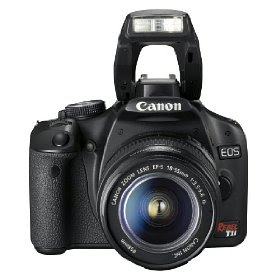
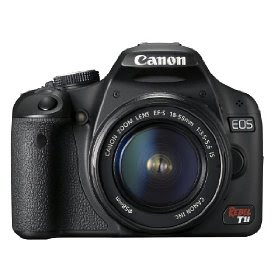
Canon EOS Rebel T1i Review

Canon EOS Rebel T1i digital camera is jam-choked with options, each refined and new. additionally to its admirable performance with an all-new fifteen.1 Megapixel Canon CMOS sensor, DIGIC four Image Processor, a 3.0-inch Clear read LCD with anti-reflective and scratch resistant coating, and compatibility with the EOS System of lenses and Speedlites, the EOS Rebel T1i adds outstanding Full HD video capture at resolutions up to 1920 x 1080.

Canon EOS Rebel T1i Review

Canon EOS Rebel T1i Review: Details

An HDMI port permits for fast connections to high definition TVs and monitors for simple viewing of your stills and video. the whole operation is easy and simple even though you're a beginner. You’ll have uncompromised EOS Digital performance with power and adaptability right within the palm of your hand. The country of origin is Japan.

Canon’s CMOS (complementary metal oxide semiconductor) sensor captures pictures with exceptional clarity and tonal vary and offers the foremost pixels in its category. It offers several of identical new technologies as utilized by Canon’s skilled cameras to maximise every pixel’s lightweight gathering potency. Its APS-C size sensor creates a good one.6x field of read (compared to 35mm format). Canon’s DIGIC four Image Processor dramatically hastens all camera operations for intuitive operation and offers enhancements in each fine detail and natural color copy. It works collectively with the Canon EOS Rebel T1i’s image sensor to attain unprecedented levels of performance in all lighting things.

Canon EOS Rebel T1i Review

Canon EOS Rebel T1i digital camera’s Auto Lighting Optimizer is one more image-quality tool that involves the rescue in difficult lighting conditions. It will truly lighten dark areas of a scene whereas guaranteeing that bright areas maintain tonal detail. It’s out there in all shooting modes, as well as P, Tv, Av and Manual.

Canon EOS Rebel T1i: Review from consumer

Canon EOS Rebel T1i is the primary DSLR I've owned, however not the primary I've used, and compared to variety of different cameras on the market these days this one is awesome. My biggest criticism is that the grip, I even have huge hands and sometimes realize this camera awkward to carry, however aside from that i am very proud of it. i might suggest this camera to anyone craving for a fairly priced entry-level DSLR.

Could not find what you were looking for?

Thursday, August 11, 2011

GE X500 Camera

If you would like it all, you will need one in all the GE professional series of bridge cameras. The new GE X500 is as powerful because it is straightforward to use. All the newest digital camera technology is seamlessly inbuilt to replicate your own powerful sense of favor and capture those priceless reminiscences that outline our lives. meet up with to the action and take photos sort of a professional with the X500 from GE's professional line of digital cameras.

Capture all of your videos with ease. The GE Power Pro X500-BK takes MPEG-4 videos in .MOV format with G.711 monaural audio for easy, one-touch recording of these special moments. and they are straightforward to share employing a USB affiliation or SD card reader.

GE X500: How good is it?

Correct unintentional camera movements with automatic image stabilization, providing you with crisp, clear photos. The Auto Scene feature automatically selects and sets the proper scene kind for the sharpest, most vibrant footage potential.

An in-camera HDR feature adjusts exposure for additional detail in lightweight and dark scenes. Get the correct balance of detail in spite of the lighting conditions. A 3200 ISO improves footage in low lighting condition for optimal exposure.

In addition to the two.7-inch LCD screen, GE X500 has an electronic read finder for additional correct shots in real time and higher scene composition.

GE Power Pro X500-BK

An in-camera auto-brightness feature adjusts the camera's LCD viewing screen for additional detail in lightweight and dark scenes. Get the correct balance of detail in spite of the lighting conditions.

Face Auto Exposure enhances facial expression detected by the camera for true subject highlighting, creating your friends and family jump out of your photos. Smile Detection permits you to capture the correct moment by permitting the shutter to automatically unharness when the subject’s smile seems.

GE Power Pro X500-BK

GE X500: What consumer said?

Pros. The sixteen megapixel sensor is nice. Most entry level digital cameras of any kind and complete commence at concerning twelve MP without delay. GE has this GE Power Pro X500-BK at sixteen. i believe the opposite sixteen MP cameras are over twice the value of this one. you'll be able to see the distinction after you zoom in on your pc, the clarity is obvious.
The zoom on the GE X500 is awesome. This camera has 15X optical zoom and beside digital zoom (digital zoom takes away image quality as you zoom in thus simply keep that in mind when using it) it's a complete of 60X zoom.
The X500 encompasses a panoramic mode that i really like as a result of I wished a panoramic film camera and currently i do not need to purchase one. This camera additionally encompasses a setting for everything from fireworks to snow to fisheye. over simply night and outdoors.. there are twenty totally different presets and thats not as well as the various modes the camera has for shooting (it has manual, terribly important!)

So far I've taken 100+ footage and therefore the battery remains full on the show. The manual says it will shoot 300+ footage on a group of four batteries... thats pretty sensible.

Not a professional for a few, however this GE X500 digital camera could be a bit hefty. i prefer it as a result of its such as you are literally holding onto one thing. however it's heavier than i assumed it'd be.
Viewfinders are generally unnoticed of cameras currently as a result of all of them have screens, however this one has an electronic viewfinder (for those sunny days) i believe thats a pleasant perk.

The video quality is best than I expected, though its not HD. The sound is so-so however thats the case on everything with a recorder.

GE Power Pro X500-BK

Cons. The screen resolution and quality is not the greatest (I have a three year previous inventive mp3 player that encompasses a abundant nicer screen and it's smaller.) Like most cameras though you check up on the screen and its grainy and therefore the color does not look quite right however you snap the picture/ upload and it's adore it ought to when its on the pc screen (or printed out.) i believe that they had to chop corners somewhere.

The lens pops out after you flip it on and therefore the lens cap pops off, albeit you only need to appear at the photographs on your SD. and that i additionally don't just like the lens cap. It simply slides on. No clips.
The sound effects were annoying, however theres a setting to show it off (saves your battery anyway.)

Not a biggie however the SD slot is within the battery compartment. simply out of the manner i assume.
The camera could be a bit noisy, you'll be able to hear the processor operating and therefore the internal stuff on the move occasionally. additional of a facet note than a con though.

Bottom line is i am undecided how long the GE X500 can last (because I got it within the mail 2 days ago) however thus far i am terribly glad that I bought this camera. it is a ton like Fuji's bridge camera and if you recognize the menus and buttons from their cameras then this factor are going to be a snap as a result of its just about a carbon copy. The layout is easy enough for a beginner or teen who's wanting into photography and it wont break the bank sort of a nikon or canon with a similar specs.

Could not find what you were looking for?

Tuesday, August 9, 2011

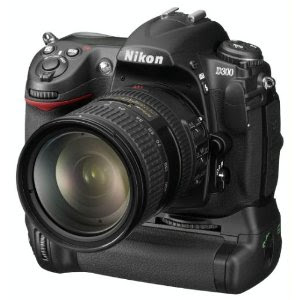
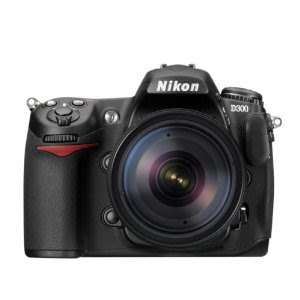
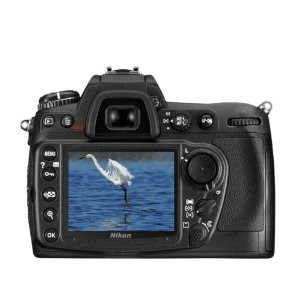
Nikon D300 Review

Nikon D300 brings Nikon's exclusive EXPEED Image Processing System that's central to driving the speed and processing power required for several of the camera's new options. The D300 options a brand new 51-point autofocus system with Nikon's 3D Focus Tracking feature and 2 new LiveView shooting modes that permit users to border a photograph using the camera's high-resolution LCD monitor. The D300 shares an analogous Scene Recognition System as is found within the D3; it guarantees to greatly enhance the accuracy of autofocus, autoexposure, and auto white balance by recognizing the topic or scene being photographed and applying this info to the calculations for the 3 functions.

The D300 reacts with lightning speed, powering up during a mere zero.13 seconds and shooting with an imperceptible 45-millisecond shutter unleash lag time. Nikon D300 is capable of shooting at a speedy six frames per second and might go as quick as eight frames per second when using the optional MB-D10 multi-power battery pack. In continuous bursts, the D300 will shoot up to a hundred shots at full twelve.3-megapixel resolution. (NORMAL-LARGE image setting, employing a SanDisk Extreme IV 1GB CompactFlash card.)

Nikon D300

Nikon D300: What’s in it?

Nikon D300 incorporates a variety of innovative technologies and options which will considerably improve the accuracy, control, and performance photographers will get from their equipment. Its new Scene Recognition System advances the employment of Nikon's acclaimed one,005-segment sensor to acknowledge colours and lightweight patterns that facilitate the camera verify the topic and also the sort of scene being photographed before an image is taken. This info is employed to enhance the accuracy of autofocus, autoexposure, and auto white balance functions within the D300. as an example, the camera will track moving subjects higher and by identifying them, it may automatically choose focus points faster and with larger accuracy. It may analyze highlights and additional accurately verify exposure, furthermore as infer lightweight sources to deliver additional correct white balance detection.

Nikon D300 incorporates Nikon's new Multi-CAM 3500DX autofocus module that options an intelligent array of fifteen cross-type sensors and thirty six horizontal sensors. These sensors will either be used individually or in teams, with the choice for Single space AF mode and Dynamic AF modes using teams of either 9, 21, or all fifty one focus points. The system conjointly options 3D tracking with automatic focus-point switching that takes advantage of all fifty one AF points because it uses color and lightweight info to accurately track the topic. Nikon's new Scene Recognition System and improved focus algorithms conjointly contribute to the spectacular performance of the new 51-point AF system.
Nikon D300

Nikon's new image management System makes it straightforward for users of all expertise levels to pick out and apply changes to how their footage are rendered and make optimized settings to suit their individual preferences. an equivalent settings manufacture consistent image tone, even when using completely different camera bodies. the image management System offers four basic setting options--Standard, Neutral, Vivid, and Monochrome. These will be directly changed for simple adjustment and customization of image parameters, like sharpening, tone compensation, brightness, and saturation. Photographers will customise and store up to 9 customized choices within the D300 and export up to ninety nine to a CF memory card, enabling photographers to share settings among multiple cameras that feature image management System.

Taking a cue from the recognition of Nikon's D-Lighting technology, Nikon D300 options a brand new Active D-Lighting mode that, when enabled, provides exceptional real-time highlight and shadow correction with optimized image distinction. Active D-Lighting produces broader tone replica in each shadows and highlights by managementling highlights and exposure compensation whereas applying localized tone control technology to attain a additional pleasing level of distinction across the complete image. and since the benefits of Active D-Lighting are applied as pictures are captured, image editing time will be shortened.

The D300's LiveView feature offers 2 modes for confirming subjects and composition on the new 920,000-dot, high-resolution 3-inch LCD monitor whereas shooting. The Tripod mode is meant for precise focus and accuracy when the camera is on a stable platform and also the subject isn't moving. during this mode, the camera focuses on the topic using focal-plane distinction and any purpose on the LCD screen will be selected because the focus purpose for the image. The second mode, known as Handheld mode, permits photographers to use the camera's standard TTL focusing system with all 51-points and fifteen cross-type points on the market. When using this mode, the camera activates focusing immediately when the shutter button is pressed to confirm correct focus.

The D300 conjointly employs a brand new self-cleaning sensor unit. Four completely different resonance frequencies vibrate the optical low-pass filter in front of the image sensor to shake particles free and scale back the looks of dirt.

The D300 inherits one in every of Nikon's most streamlined, functional, and aesthetically pleasing layouts during a digital SLR camera, designed to enable photographers to require footage with less fatigue, larger accuracy, and luxury.

The camera's viewfinder provides just about one hundred pc coverage thus footage will be framed accurately, whereas an ultra-high definition 920,000 dot VGA LCD screen on the rear of the camera displays pictures with vivid color and clarity. Its 170-degree wide viewing angle makes it straightforward to compose shots using the LCD screen in LiveView mode.

Nikon D300

The D300 options rugged magnesium alloy construction and also the camera's shutter mechanism is tested up to one hundred fifty,000 cycles. The 3.0-inch LCD is strengthened with tempered glass and also the D300's rubber gaskets and seals defend vulnerable entry points from dirt and moisture.

Nikon D300: Consumer Reviews

OK, once reading all the web reviews and skilled reviews and stewing over it for many weeks I jumped on this one with the "kit" 18-200 VR lens. i'm not a professional, though I even have thought of doing a little professional work, however I take my photography seriously. My subject is usually family/grandkids and native scenery. i'm constantly experimenting with settings and never used the quality icon picks on the mode dial on my D50, thus this camera appeared a natural upgrade to me.

First, i'm fully enthralled. this is often an fully fabulous equipment combination. There appear to be few settings, options, or configurations that I may have dreamed of that may have created me happier. Things I love:
The 18-200 VR lens; I even have taken pics at 1/30 of a second at full 200mm zoom that i would not have thought potential. It very will stop most motion blur. Besides the particular camera this was the most effective a part of my purchase. I rarely miss an effort for want of fixing lenses, my former lenses being an 18-55 and a 55-200. With the flexibleness of the camera itself and my second lens being a faster 30mm f1.4 this is often pure photography fun on behalf of me. i do know that some professionals have dissed this lens as being but professional, with distortion at sure extremes and a few blur within the midrange 135mm. For the photography I try this isn't vital. once I do notice some distortion it isn't vital and that i haven't seen any blur, though i'll not be trying shut enough.
Auto-ISO: Still fidgeting with this feature however the cool issue is that you just will set it the minimum shutter speed you wish and it'll boost up the ISO to stay that speed when required. 1/30 appears an honest speed with the VR lens, though there's generally subject motion blur (not camera motion blur), however this is often conjointly fun to play with. It will continually be bumped up to 1/60 or additional.

External controls: Most of the commonly-changed choices are at your fingertips which suggests you do not got to visit the menus as typically. I even have a disciple with a D40x and most of the choices are in menus and my D50 has some on external buttons. The D300 appears to own an honest balance. You terribly clearly couldn't have place all the menu things on external buttons on this camera!

Speaking of menus; I even have a good fondness for the assistance feature on the market on this and on my D50. undecided of different maker's cameras however if do not|you do not} apprehend or don't keep in mind a feature the assistance button can nudge you.

The customizable individual lens focus adjustment feature is that the cat's meow. My aforementioned Sigma 30mm lens has never centered properly and that i was ready to quickly regulate this in-camera. Henceforth, all my footage taken with the Sigma lens can a minimum of be properly focused!

OK, one in every of my favorite features; the intervalometer. Ooooo, Ahhhh. It will be employed by itself or with multi-exposure. By itself you'll be able to set it up to require footage at no matter interval you wish. this will be nice fun. I set it up on a tripod at our reunion to require an image each minute whereas we have a tendency to were enjoying cards, even catching my brother with Easter eggs over his eyes. This virtually makes up for the dearth of an infrared remote capability, though i suppose they might not have included everything and to be honest, it's on the market with external added equipment. Multi-exposure is additionally pretty cool. additional stuff to play with.

Some observations; if you have got an occurrence arising get the camera early and play with it. i used to be still deciding the settings once I visited a family reunion and took 1500 footage. several of these were multi-shots of an equivalent subject thus I dumped the extras and ended up with around five hundred sensible footage. I took some cluster footage and a few were blurry as a result of I misunderstood a feature or 2.

I take lots of profile footage and also the solely thanks to properly target these is to identify target the nose or eye. i might have liked a feature that acknowledges a profile and focuses properly while not changing settings. i suppose that's asking a lot! perhaps within the next generation.

The weight of the device is off-putting for a few, though not on behalf of me. I even have huge hands and also the camera fills them nicely and also the "balance," the approach it feels in one's hands when it's turned completely different directions, feels excellent to me, just like the approach a well-balanced 18v cordless drill feels. Though significant, the burden is evenly distributed and it will be turned and manipulated while not strain, a minimum of not on behalf of me.
The battery life on behalf of me has been but the one thousand footage others are obtaining. additional like five hundred or slightly additional. i am undecided if this is often as a result of the VR lens as a result of I even have not used my Sigma a lot of nevertheless. five hundred remains lots and that i am not sad with this.

The only different "issue" if you'll be able to decision it that's the front aperture dial; My finger sticks to the rubber around it that makes it tougher to show it. simply a nit-pic (pun intended) and one thing i'll get used to.
Overall, I will in truth say i like Nikon D300. It does not get far better than this!


Could not find what you were looking for?

Nikon D200 Review

Nikon launches its powerful, feature-packed Nikon D200 digital SLR camera, delivering a high-precision, high-performance package and making a brand new category of camera between entry-level and skilled digital SLRs.

The Nikon D200 combines the solid look and feel and advanced camera operation of Nikon's D2 skilled series with the approved user-friendliness and beautiful image quality that are the hallmarks of all Nikon digital SLRs.

Nikon D200 has been crafted to attach a variety of newly developed Nikon technologies with advanced options inherited from the Nikon D2x, guaranteeing an final shooting expertise with exceptional and versatile imaging performance, high speed, and an immediate response. The result's a mix of very good options, high-quality parts, and fantastic results.

This combination makes the D200 good for passionate, dedicated amateur photographers, business users in fields like the police, dentistry and museums, and professionals or semi-professionals yearning for a second camera to enhance their Nikon D2x or D2Hs.

Nikon D200 Review

Nikon D200 Review: More Details

Nikon D200 boasts a light-weight, durable, and sturdy magnesium-alloy body and a sophisticated sealing system that protects the camera from moisture and dirt, creating it appropriate for a variety of rigorous and difficult assignments. The integrated double-bladed shutter, which includes a refined mirror balance system, has been tested to well in far more than a hundred,000 cycles.

The D200's camera operation is inherited from the Nikon D2x, and boasts quite forty well organized custom settings, thus it's ideally suited to the user's wants and preferences. The large, bright viewfinder offers .94x magnification and ninety fifth frame coverage each horizontally and vertically to ensure exceptionally detailed viewing management.

A 2.5-inch high-resolution LCD screen provides an ultra-wide 170-degree viewing angle from all directions. pictures on Nikon D200 are often magnified by up to four-hundredth thus users will check for fine detail.

The top LCD panel is that the largest within the business, containing a wealth of information like shooting mode, battery condition, card data, gridline show, shutter speed, f-stop, and shots remaining. a brand new color-coded menu show facilitates simple viewing, supported by intuitive keywords to help speedy navigation.

Nikon D200 Review

The newly-developed high-energy EN-EL3e rechargeable lithium-ion battery delivers enough power to the D200 to support the shooting of up to one,800 pictures on one charge, that takes now not than a pair of.5 hours. Battery standing are often checked through a real-time fuel-gauge system, found within the menu. An optional MB-D200 battery pack extends shooting capability, using AA-size batteries (six are needed) or 2 NE-EL3e's.

Nikon D200 is right for capturing sudden or fleeting moments, due to the zero.15 second power-up, a speedy shutter lag time of simply fifty milliseconds, and a shortened viewfinder blackout time of one zero five milliseconds.

Nikon D200is additionally capable of ultra high-speed continuous shooting of 5 frames per second, capturing up to thirty seven photos in JPEG or twenty two in RAW format (when employing a SanDisk SDCFH Ultra II or SDCFX Extreme III one GB CF card). A newly developed and highly versatile Multi-CAM1000 Autofocus options a pinpoint 11-area AF system inherited from Nikon D2 series additionally as a 7-area wide AF to specialise in larger moving objects simply.

Another feature inherited from the D2x is that the 3D-Colour Matrix Metering II, that delivers optimised exposure using new technology developed for the Nikon one,005 pixel RGB exposure/Colour Matrix Metering sensor. this technique evaluates seven parameters in each shot--including brightness, color, contrast, selected focus space, and camera-to-subject distance--and references this information against an on-board database of over thirty,000 actual photographic scenes to instantly and accurately calculate the ultimate worth.

Nikon D200 Review from Customer

If you are considering this camera you doubtless to be in one in all 2 camps: A Nikon person making an attempt to see whether or not or to not purchase the N50, N70 or Nikon D200; otherwise you already grasp you would like one thing additional on the professional finish of the pro-amateur spectrum and are attempting to settle on between a Nikon and a Canon. If you are within the latter camp then you cannot get it wrong with either the D200 or any of Canon's offerings. They each build wonderful cameras. If you are already a Nikon person, get the Nikon; if you are already a Canon person, get the Canon.

Nikon D200 Review

That said, i am a Nikon person, and once five years of getting fun with my film-based N80 I needed to form the leap into real digital photography. I say real, as a result of I've had a Canon Sureshot for four years and it's nice for snapshots, however when it involves landscapes or managing any reasonably lighting problems, it simply does not live up. Since i am a Nikon person (all my lenses work with the new digital SLRs) I checked out the N50, N70 and Nikon D200. There are lots of sites out there that compare these 3 cameras (against one another and therefore the competition) to death, thus I will not hassle with all the small print.

We purchase cameras to require a range of various photos and my alternative was driven by my wants, thus my review goes to be coloured by the forms of photos I tend to require. My favorite pastime is landscape photography. For this, any of the 3 cameras can take nice photos. The six mega pixels on the N50 and N70 are quite enough to require nice photos - I've got a 20x30 poster of Yosemite's 0.5 Dome taken with a friend's N70 that's as crisp as something I've seen. Having 10mps offers me additional area to play with when it comes time for cropping, though, and that is continually nice, however hardly a reason to shell out an additional grand.

My next favorite photography subject is my yellow lab, Happy. If he is standing or sitting still, then all 3 of those cameras take wonderful portrait shots. however when he is moving, like launching himself off the tip of a pier to fetch a toy within the lake, the D200 very shines. Its 5fps burst mode takes good photos. It focuses every shot and with its wealthy twenty five image buffer engineered into the camera, I've nevertheless to fill it up. What this suggests is that it does not matter what speed your memory card is. The camera takes its photos and puts them into its buffer. Then a separate set of processors moves the image from the buffer to your memory card. i'd have to be compelled to hold the button down for over eight seconds before the burst mode would prevent (it would merely prevent to the speed of your memory card here - it would not stop taking pictures). This clarity of the photographs in burst mode is what created me opt for Nikon D200, and with the 18-70mm DX kit lens you will get some good photos.

While all 3 cameras allow you to take nice image, the D200 makes it terribly simple to alter the foremost usually used settings. image quality (e.g. resolution and depth), White Balance and ISO are often modified by holding down one button along with you along with your left hand and rotating the command dials with your right. this suggests you do not have to be compelled to take your eyes off of what you are looking at through the viewfinder so as to alter these settings, and that i notice myself changing a minimum of all in all these on nearly every image I take. To be sure, you'll be able to modification them on the N50 and N70 additionally, however simply not as quickly or simply.

Other things I liked regarding Nikon D200 are:
  • Build. It's product of metal and contains a terribly nice heft to it. The D50 and D70, very like my N80, are product of a really sensible plastic, and i have never had any issues with the N80, however the D200 simply feels sensible
  • LCD. The 2.5 in. LCD makes it simple to see whether or not or not you are proud of an image within the field.
  • Color. The auto white balance for the D200 is awesome and therefore the colours are good.
  • four settings banks. you'll be able to preprogram four settings (ISO, WB, image Quality, etc) thus you'll be able to get to it quickly.

One last purpose - the D200 is extremely tough to urge a hold of those days, however it's slightly easier to urge in kit kind (which comes with a lens). The 18-55mm lens is good, however I like the 18-70mm (remember, with digitals you have got to multiply the focal length by one.5 to match it with their film counterparts, that the 18-70 for digital is additional sort of a 28-105 for film). The 18-70mm kit can run you regarding $300 quite the body itself, and it's worthwhile.

If you do not have already got an enormous zoom lens then the new 18-200mm Nikon VR lens is awesome (equivalent to 28-300 for film). It takes beautiful photos and has all the zoom you are doubtless to want. It runs between $700 and $800 and is even tougher to urge than the D200 (which is why i do not have one nevertheless :-).

In summary, you cannot get it wrong with any of those Nikons. Nikon D200, however, is unquestionably the king of the hill. Happy image taking!

Could not find what you were looking for?

Monday, August 8, 2011

Best Digital SLR: Nikon D7000

Nikon D7000 deserves a title of Best Digital SLR. Meet the new Nikon D7000, a camera ready to go wherever your photography or cinematography takes you. experience stunning images with sharp resolution and sleek tonal gradation, thanks to the 16-megapixel DX-format CMOS image sensor and a robust EXPEED two image processing engine. cash in of its wide ISO range of a hundred to 6400 (expandable to twenty five,600) and its incredibly low levels of noise. Expect your images tack-sharp and accurately exposed, thanks to the camera’s 39-point AF and Scene Recognition System using a two,016-pixel RGB matrix metering sensor. And with an approx. 0.052-second unleash time lag and approx. six frames-per-second shooting, you won’t miss an instant.

Why Nikon D7000 is the Best Digital SLR?

You’ll see precisely what you’re capturing with the approx. 100 percent frame coverage viewfinder, and for those who want to shoot each stills and films, the D7000’s D-Movie capabilities currently include Full HD 1080p capture with full-time autofocus and manual exposure. All of this advanced imaging technology is kept safe beneath the magnesium alloy covering the top and rear chassis of a compact body, whose sealing has been severely tested against moisture and mud. The D7000 is prepared to shoot indoors and out, and at 150,000 cycles tested, the camera’s durable shutter unit helps you retain shooting. combine all this with the unrivaled NIKKOR lens lineup and inventive Lighting System and you have got everything you wish to explore your imagination to its fullest. Where can creative freedom like this take you? establish, with the D7000.

Best Digital SLR

The D7000 welcomes during a new era of movie capture: Full HD 1080p and movie editing functions for exceptional cinematic replica and quality. in addition to smooth-moving images, the camera can catch up on distortion and other image-degrading problems. Besides auto exposure mode, the D7000 offers manual exposure mode, which locks within the exposure value when shooting scenes with varying distinction levels, like when panning from a bright window to a dark interior. aside from a built-in monaural microphone, the D7000 incorporates an external microphone jack for high-quality stereo sound recording options.

The D7000’s strategically positioned 39 AF points cover a significantly wide area of the frame, giving you flexible compositional prospects. The 9 AF points within the center utilize powerful cross-type sensors — especially helpful after you would like tack-sharp focus like with portraits and macro work. and in contrast to other manufacturers’ systems, the D7000’s 9 cross-type sensors work with all AF NIKKOR lenses f/5.6 or faster. The D7000 offers a variety of AF area modes, including dynamic-area AF using 9, 21, 39 points. Switch between the 3, betting on the predictability of your subjects’ movement, and therefore the selected AF point and surrounding points can track your supposed subject automatically.

There is conjointly 3D tracking, which continuously follows moving subjects at intervals the 39 AF points, indicating the activated AF point within the viewfinder. Utilizing Nikon’s Scene Recognition System, Auto-area AF properly judges the most subject at intervals 39 AF points and focuses on it. Therefore, despite what true or composition entails, the D7000’s autofocus system are ready to meet your focus desires.

What consumer says about the Best Digital SLR?

This Best Digital SLR is brilliant to hold and use. Nikon has done it a lot of} and has made the user interface more usable and streamlined. What to alter flash modes. Press the flash pop-up button and rotate the management wheel. Sweet. want to alter produce and use a User outlined mode? There are 2. Set your mode up. move to the menu and reserve it. To use it rotate the shooting mode dial to U1 or U2. Presto you're there. within the D300 and D700 you to have to setup things within the menu and switch within the menu. Also, there were two sets of belongings you could change and that they weren't all inclusive. it absolutely was all horribly confusing and that i never used it. Speaking of shooting modes. there's currently one position on the shooting mode dial for scene mode shooting. you change through the different scene modes with the management wheel and therefore the sort scene shows up on the rear screen. Sweet. I can maintain and on however needless to say Nikon have very improved their interface. One caveat, i do not suppose it is quite up to par with the GH1 to alter exposure compensation (IMO the most necessary control) however still an enormous step within the correct direction in handling. i like the handling of the D7000 higher than either the D700/300.

Best Digital SLR

The D300 wasn't that nice for Hi ISO. It shoots clean at four hundred ISO and usable up to 1600. (The D90 and D300s were better) The D700 was fantastic. Clean at 1600 ISO and usable up to 6400. It displayed new worlds. The D7000 is close to the equal of the D700. Enough said. simply to convey you an example. The bouquet toss at a reception is usually tired poor lightweight. By using 1600 instead of four hundred you get the equivalent of 4 times a lot of lightweight. At ISO400 you flash may need to use 1/4 power and you can get 1 maybe two shots of the toss and catch before the flash needs to recharge. At ISO1600 your flash would only have to be compelled to use 1/16th power and currently you can get 5-6 shots. this is often huge.

Like all fashionable DSLRs it takes nice footage. i do not pixel peep thus i can't very say that I notice a distinction between the photographs from the D7000 and any of my 12mp cameras. It makes really nice footage and that is all I care concerning.

Useful Photography options (Not selling Features)

  • 100% read finder! big bright with 100 percent coverage. No a lot of guessing of your framing. (It isn't as bright as the D700. However, it is 100 percent vice 95%)
  • 2 SD slots - When your getting paid to shoot a marriage or any gig, my card broke isn't an excuse. very helpful feature. For the house user put 2 smaller cards rather than one big card and save cash.
  • Smaller and lighter than D300, D700, D3s, D3x- after you stand on your feet for 9 hours shooting the marriage and reception, you begin to feel every ounce you're carrying. typically you will be carrying 2 bodies with a {fast|a quick} tele zoom and fast wide zoom. That starts to urge heavy. lightweight we have a tendency toight here we return.
  • 2016-Segment RGB Meter- for spot on exposure and white balance--No one touches Nikon on this and this one is astounding.
  • 1/8000th -- very helpful for shooting into the sun wide open with a bright lens
  • 1/250 -- could be higher (1/500th for D40) however could be much worse. Auto FP helps.
  • Magnesium body and higher sealing -- Shoot in dusty environments while not messing up the inside your camera.
  • Uses the ML-L3 infra red remote -- tiny and cheap. IR sensor on the front and back of the camera.
  • Autofocus focus motor for non-AF-S lenses

Marketing options that will typically be helpful

--16Mp -- Nikon was obviously getting creamed within the selling wars on this. this is often about to lead to larger files requiring larger exhausting drives and faster computers. often it will be helpful if you cannot frame as shut as you would like and you wish to crop or you have to be compelled to print big. Alien Skin magnify two, Image Resizing Plug-in Software for Photoshop, Macintosh & Windows and real Fractals six professional Edition 1-user Full are 2 very nice programs that can increase the scale of your photos for printing large. 16 MP is nice by not necessary.
--39 point Auto Focus -- To me in some ways this is often higher than the 51 point of the D300 and D700 as that gets too unwieldy. However, you really don't even would like 39. However, still helpful occasionally.
--6 frames per second-- I very rarely ever put my camera in 3 frames per second. after I do thus it fills the cardboard quickly. If you're shooting the massive game then six is nice. Or it is nice for some cool computer graphics shots. aside from that you will not very find yourself using it that much.

Video
The other issue i am not very about to dwell on is that the video capabilities. In my opinion all the varied video options are largely selling hype very targeted at a distinct segment market. Shallow depth of field video is tough and time consuming to shoot and edit properly. the average family home user has neither the time nor inclination to do this. With that said, it is nice to only have to carry one device to take still footage and video. thus I do get pleasure from that feature, but 1080 isn't very necessary. really with up converting DVD players standard def remains very usable and takes up so much less space. Suffice it to say that the video capabilities are very good and will do something a home user would wish it to do. is used for professional Videos as demonstrated by Chase Jarvis.

Intangibles

This is the Best Digital SLR and it feels very solid in your hands. It feels way more substantial than the D40/D90 while not feeling sort of a brick the method the D300/D700 do. i am certain the D300 has a lot of selling options than the D7000 however i might have to research them to figure out what they're.

Best Digital SLR: Conclusion

In the finish it all comes down to what's necessary to you. Smaller weight and size is changing into much more necessary to me and this camera is a very good trade off of options for size and weight. something that's missing i do not even use thus i am unsure what it may be. My D700 was recently stolen and whereas I miss it, the D7000 is a worthy replacement for it. I opted to urge the D7000 and Panasonic GH2 and save the $300 distinction for a lens.

Pros

  • 100% read finder!
  • 6 fps (7D is eight. However, i believe this range is overhyped in most cases. Even shooting at 3 FPS can refill you card with photos that look remarkably similar) 8+ is required for professionals shooting professional sports. Not enthusiast shooting high school etc.
  • 16mp sensor (a selling increase however still nice to allow some space for cropping)
  • 14 bit photos
  • 39 point auto focus sensors (19 cross point) this is often slightly of a selling issue however it is still nice and it does not matter concerning the 51 on D300s and above. Still very nice.
  • 2016 scene meter - compares against information base for WB setting and color settings
  • Excellent battery life
  • MD-11 Optional Battery Grip
  • 2 SD card slots for keep a copy redundancy or double the cardboard space! Outstanding
  • Magnesium used to make camera stronger

Cons
  • 16mp sensor (takes up a lot of storage on your exhausting drive) (12mp JPG 3mb twelve mp RAW = twelve mb 16mp JPEG = five mb 16 mp RAW = 16 mb. this is often for twelve bit. fourteen bit would need more)
  • Camera heavier than it used to be
  • No swivel screen - when using the GH1 extensively you really miss this when shooting at weird angles. You especially miss it for macro photography.
  • No full time live read - Ditto from above. Live read is what you see is what you get. Forgot to alter white balance-- you will see that when folks are yellow, blue or inexperienced. Have it set in manual and blowing everything out-- you'll see that as a white screen.

Could not find what you were looking for?